
Hydraulic hoses are built to withstand high pressure, temperature, vibration, and demanding operating conditions. But even a properly selected and installed hose will eventually wear out. Knowing when to replace a hydraulic hose can help prevent unexpected downtime, hydraulic leaks, equipment damage, and serious safety hazards.
At Hydraquip, we help customers identify hydraulic hose problems, determine the right replacement specifications, and build hose assemblies suited to the application. Understanding the warning signs below can help maintenance teams determine when a hose should be evaluated, removed from service, or replaced before failure occurs.
Safety First: Hydraulic hose inspection and replacement should only be performed after equipment has been safely shut down, hydraulic pressure has been relieved, stored energy has been controlled, and applicable company safety and lockout/tagout procedures have been followed. Never use your hand to locate a hydraulic leak. High-pressure hydraulic fluid can penetrate the skin and cause a serious injection injury. Hydraulic injection injuries require immediate medical attention, even if the injury appears small or minor.
Hose selection, routing, replacement, maintenance, and storage should also follow equipment manufacturer recommendations and applicable industry-recommended practices, including guidance such as SAE J1273.
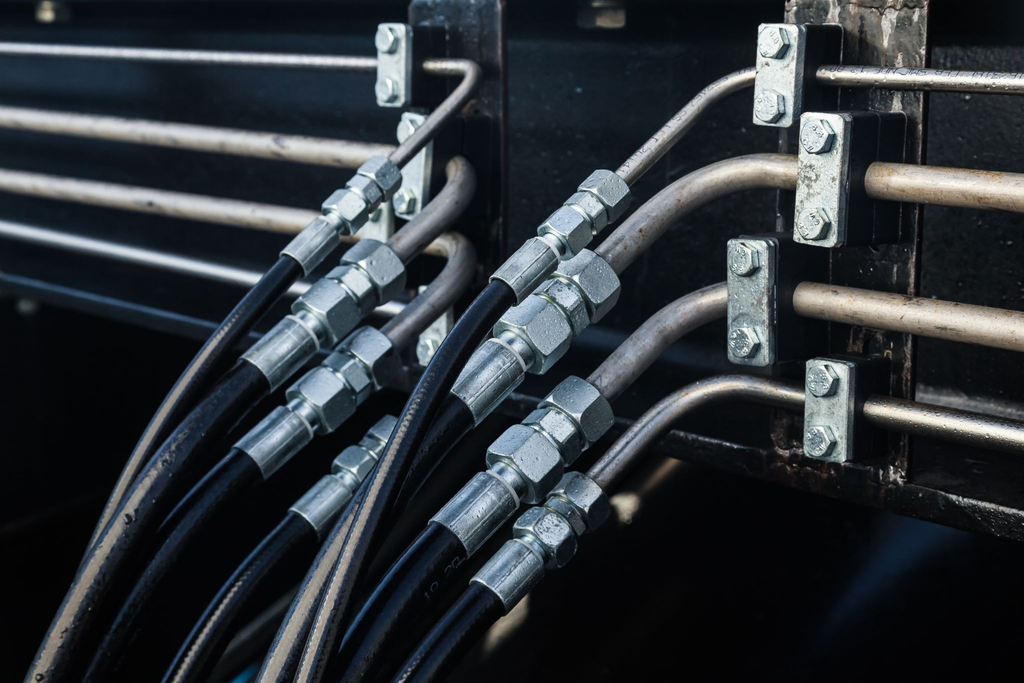
How Do You Know When a Hydraulic Hose Needs to Be Replaced?
A hydraulic hose may need to be removed from service when it shows significant damage, leakage, exposed reinforcement, bulging, severe abrasion, cracking, fitting damage, or other conditions that compromise its structural integrity or ability to safely contain hydraulic pressure.
Not every sign of wear automatically means immediate replacement. Minor surface cracking or light cover wear, for example, should be evaluated and monitored while the underlying cause is addressed. More serious damage requires prompt action.
Before replacing a failed hose, it is also important to determine why it failed. Abrasion, improper routing, excessive heat, vibration, pressure spikes, chemical incompatibility, and incorrect hose selection can all contribute to premature failure. Simply installing an identical replacement may not solve the underlying problem.
10 Signs Your Hydraulic Hose Needs to Be Replaced
1. Visible Cracks in the Hose Cover
Cracks along the outside of a hydraulic hose can indicate aging, excessive heat, ozone exposure, or environmental deterioration.
Pay particular attention to cracking:
- Along the hose length
- Around bends
- Near fittings
- On hoses exposed to sunlight or ozone
- On hoses operating in high-temperature environments
Minor surface cracking does not necessarily mean a hose must be replaced immediately. However, cracking should be evaluated to determine whether it is superficial or has progressed into the hose structure.
Action: Evaluate the condition, identify the cause, and replace the hose if cracking has compromised its structural integrity.
2. Cuts or Severe Abrasion
Abrasion is one of the most common causes of premature hydraulic hose failure. A hose may rub against equipment frames, other hoses, moving components, sharp edges, clamps, or supports.
Minor cover wear should be evaluated before it progresses. Once abrasion damages or exposes the reinforcement, the hose’s pressure-containing capability can be compromised.
Action: Any hose with exposed or damaged reinforcement should be removed from service and replaced. Before installing the replacement, identify and correct the source of abrasion.
At Hydraquip, identifying the source of abrasion is an important part of addressing a failed hose. If the underlying routing or protection issue isn’t corrected, the replacement hose may experience the same failure.
3. Bulges or Blisters
A bulge or blister in the hose cover can indicate internal deterioration or damage.
Even if the hose isn’t leaking, a visible bulge should be treated as a serious warning sign. Internal damage can weaken the hose and increase the risk of sudden failure under pressure.
Action: Do not puncture, cut, or otherwise attempt to repair a bulging hose. Remove the assembly from service, replace it, and investigate the cause of the failure.
4. Hydraulic Fluid Leaks
Hydraulic fluid leaking from the hose itself is a clear indication that the assembly needs immediate attention.
During an inspection, look for:
- Drips
- Wet spots
- Fluid residue
- Misting
- Visible spray
- Fluid around fittings
A small leak should not be considered harmless. High-pressure hydraulic fluid can cause serious injection injuries in an instant. Never use your hand to locate a hydraulic leak.
If a leak is suspected, safely shut down the equipment, relieve hydraulic pressure, control stored energy, and follow applicable safety and lockout/tagout procedures before investigating the source.
Action: A hose leaking through its cover or showing other significant leakage should be evaluated immediately and may need to be removed from service and replaced.
If the source of the leak is unclear, Hydraquip can help determine whether the issue is coming from the hose, fitting, connection, or another component in the hydraulic system.
5. Exposed Wire or Reinforcement
Hydraulic hose reinforcement provides much of the hose’s ability to withstand pressure. When wire or other reinforcement becomes visible, the outer cover has been compromised.
Exposed reinforcement can result from:
- Abrasion
- Cuts
- Improper routing
- Excessive bending
- Mechanical damage
- Chemical deterioration
Action: Exposed reinforcement is a serious replacement condition. Remove the hose from service and replace it rather than continuing to operate an assembly with compromised pressure containment.
6. Kinks, Crushing, or Excessive Bending
A hose that is kinked, crushed, twisted, or bent beyond its recommended bend radius may have internal damage even if the outside cover looks relatively normal.
Improper routing can restrict fluid flow and place excessive stress on the reinforcement and fittings.
Before installing or replacing a hose, consider:
- Required bend radius
- Hose movement
- Equipment articulation
- Vibration
- Routing and moving components
- Correct clamps and support
Action: Severe kinking, crushing, or deformation should be evaluated immediately. If the hose’s structure or pressure-containing capability has been compromised, remove it from service and replace it. Correct the routing issue before installing the replacement.
Hydraquip’s team of hose specialists can help evaluate hose routing and select an appropriate assembly for the movement and conditions of the application.
7. Heat or Burn Damage
Excessive temperature can accelerate hydraulic hose deterioration.
Signs of heat damage may include:
- Hardened hose cover
- Brittle material
- Discoloration
- Cracking
- Burn marks
- Melted areas
Heat can come from either the hydraulic fluid itself or from nearby equipment such as engines, exhaust systems, manifolds, or other heat sources.
Action: Evaluate the extent of the damage and identify the source of excessive heat. If the hose has been structurally compromised, it should be removed from service and replaced. Simply installing another hose may not solve the problem if the operating conditions remain unchanged.
The application, hose construction, routing, and surrounding environment should be evaluated before selecting the replacement.
8. Damaged or Corroded Fittings
A hydraulic hose assembly is only as reliable as its connections.
Inspect fittings for:
- Corrosion
- Cracks
- Damaged threads
- Loose connections
- Leaks
- Mechanical damage
- Improper alignment
A hose may appear to be in good condition while the fitting or connection is approaching failure.
Action: Damaged fittings should be evaluated before the assembly is returned to service. If a fitting or connection compromises the assembly, the affected components should be replaced using the correct hose, fitting, and assembly specifications.
When replacing a hose assembly, Hydraquip can help ensure the hose, fittings, and connection type are properly matched to the application.
9. Repeated Hose Failures
If the same hose continuously fails, replacing it over and over may not address the actual root cause.
Repeated failures can point to:
- Incorrect hose selection
- Excessive pressure
- Excessive temperature
- Improper routing
- Excessive vibration
- Abrasion
- Chemical incompatibility
- Incorrect fittings
- Excessive movement
Action: A repeated failure should trigger a closer look at the application before another replacement is installed.
The goal shouldn’t just be to replace the failed hose. It should be to understand why it failed and what needs to change to prevent another failure.
Hydraquip can help troubleshoot recurring hose problems and identify potential causes of premature failure.
10. The Hose Has Reached the End of Its Service Life
There isn’t a single, universal replacement interval that applies to every hydraulic hose assembly. Service life depends on factors such as:
- Operating pressure
- Temperature
- Flexing
- Duty cycle
- Abrasion
- Chemical exposure
- Environmental conditions
- Installation
- Hose construction
- Application
A hose that looks acceptable externally may still have experienced internal deterioration.
Action: Follow manufacturer recommendations and maintain regular inspection and maintenance practices to help determine when replacement is appropriate. Hoses used in demanding applications may require more frequent evaluation.
How Long Do Hydraulic Hoses Last?
The service life of a hydraulic hose varies significantly by application. A hose operating under moderate conditions may last much longer than one exposed to high pressure, extreme temperatures, frequent flexing, or severe abrasion.
There is no single number of years or operating hours that guarantees a hose should be replaced.
Instead, maintenance teams should consider the hose’s:
- Age
- Operating conditions
- Inspection history
- Failure history
- Application
- Manufacturer recommendations
Regular inspection and preventive maintenance can help identify deterioration before it becomes a failure.
Can You Repair a Hydraulic Hose Instead of Replacing It?
In most cases, a damaged hydraulic hose should be replaced rather than patched or temporarily repaired.
Hydraulic hose assemblies operate under significant pressure, and an improper repair can create a serious safety hazard. Replacement should include the correct hose construction, fittings, length, and assembly method for the application.
Hydraquip provides hydraulic hose assembly and replacement solutions to help customers select the correct hose assembly rather than relying on temporary fixes.
Frequently Asked Questions About Hydraulic Hose Replacement
How often should hydraulic hoses be replaced?
There is no universal replacement interval for all hydraulic hoses. Service life depends on pressure, temperature, application, duty cycle, environmental conditions, installation, and other factors. Regular inspection, preventive maintenance, and manufacturer recommendations should guide replacement decisions.
What is the most common reason hydraulic hoses fail?
Common causes include abrasion, improper installation or routing, excessive pressure, excessive heat, incorrect hose selection, chemical exposure, vibration, and mechanical damage.
What does a bad hydraulic hose look like?
A damaged hydraulic hose may have cracks, cuts, abrasion, bulges, leaks, exposed reinforcement, heat damage, or damaged fittings. Kinking, crushing, or unusual changes in appearance can also indicate a problem.
Can a hydraulic hose be repaired?
Damaged hydraulic hose assemblies should generally be replaced rather than patched or repaired in the field. The appropriate replacement depends on the hose, assembly, and application.
Can you replace just the hose?
In some applications, the hose portion of an assembly can be replaced, but the fittings and assembly specifications must also be evaluated. The replacement needs to be properly matched to the system’s pressure, temperature, fluid, size, and connection requirements.
Replace Hydraulic Hoses Before They Become a Problem
Hydraulic hose replacement is an important part of preventive maintenance. Recognizing warning signs such as significant cracking, severe abrasion, leaks, bulges, exposed reinforcement, and fitting damage can help maintenance teams identify assemblies that may need to be removed from service.
But replacing a hose isn’t always as simple as matching the old assembly. The right replacement must be selected for the actual application, and the cause of the original failure should be addressed to prevent repeat problems.
Hydraquip provides hydraulic hose assembly, replacement, service, repair, and fluid power solutions for a wide range of applications.
Need help replacing a damaged hydraulic hose or solving recurring hose failures? Contact Hydraquip for hose assembly support, replacement recommendations, and application review.