

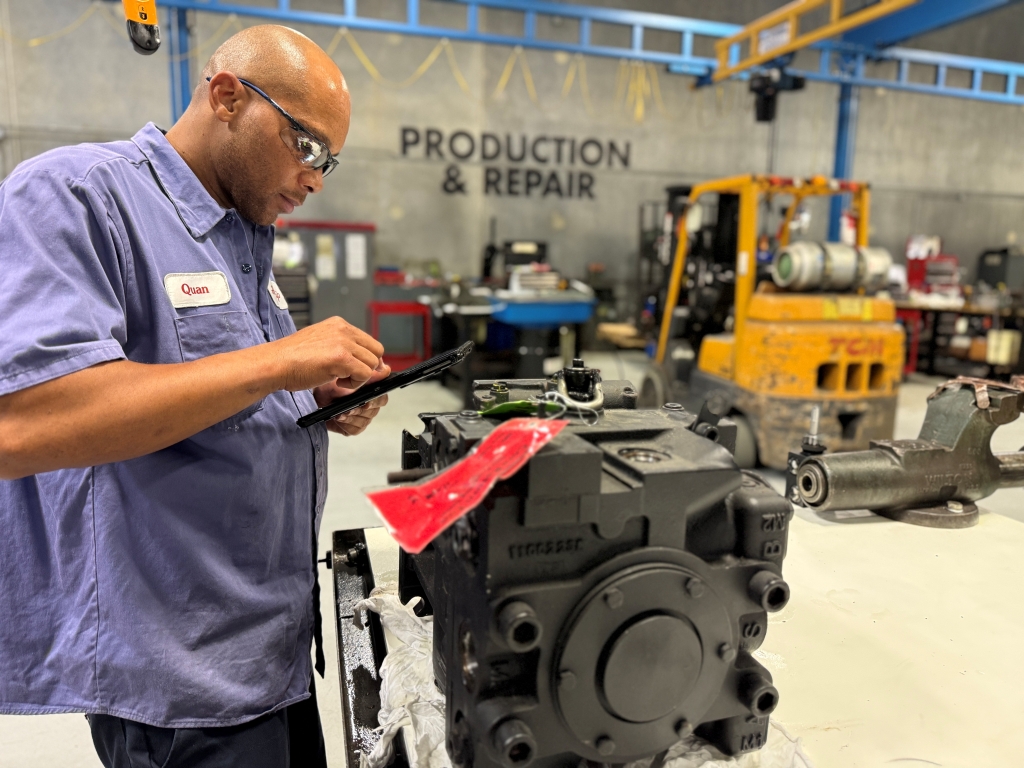
When a hydraulic system fails, the extent of the expense rarely stops at the price of the repair itself. This is because downtime is typically one of the most impactful costs that industrial facilities in Houston can face–often leading to delayed production, timeline deviation, and budget overhauls. Many industries, such as manufacturing, oil and gas, marine, and construction, rely heavily on hydraulic power to carry out everyday production. Because of this, Hydraquip’s Repair Centers are pillars for providing the technical expertise needed to keep facilities on track and determine whether hydraulic repair or replacement is the correct call.
With factory-authorized repair capabilities, diagnostic testing, and access to OEM replacement components, Hydraquip helps customers minimize downtime while protecting the performance of their hydraulic systems. Read this blog to learn more about when to choose hydraulic system repair, or when complete replacement may be needed.
When to Choose Hydraulic Repair
In many cases, hydraulic repair is the most cost-effective and economical option. Repair is usually the best choice when the damage is limited, meaning the primary components can be refurbished to factory specifications, and the expected life after repair remains high. Hydraulic components such as pumps, cylinders, valves, and hose assemblies can usually be repaired in most cases, instead of replaced. The most common repairs include:
- Replacing seals
- Lapping or worn surfaces
- Replacing worn spools or pistons in valves or cylinders
- Replacing bearings and shafts
- Removing all contamination and rust
For example, a hydraulic cylinder with leaking seals and minor rod wear may only require resealing and light machining. Similarly, a piston pump with internal wear but no major housing damage may be restored to OEM performance specifications through a rebuild in Hydraquip’s Houston-based service and repair center.
Repair is also the ideal option when replacement lead times are long or when the component is highly specialized. Many industrial and mobile hydraulic systems use custom parts that may not be readily available. In these situations, repairing the existing component can get equipment back online much faster.
Hydraquip’s hydraulic repair center in Houston supports these types of repairs with experienced technicians, factory-authorized processes, and testing capabilities that verify the repaired component is performing correctly before it is returned to service.
When Replacement Is the Better Option
Although hydraulic repair through a professional team like Hydraquip is highly effective, in some situations replacement is the smarter long-term decision. This is often limited to when a hydraulic component has experienced detrimental and catastrophic failure, severe contamination, or multiple repeat breakdowns. In these cases, replacement may provide greater reliability and overall lower lifecycle costs. Other reasons for replacement include cracked houses, excessive metal wear, heat damage, or highly specific internal parts.
For example, if a hydraulic motor continuously fails due to excessive internal scoring or contamination, repeated repairs may only provide temporary improvement. In that case, replacing the motor and solving the root problem of contamination is significantly more cost-effective than continuing to rebuild the same component when it fails.
Replacement can also be an opportunity to upgrade to newer hydraulic technology. Modern pumps, valves, and electrohydraulic controls offer better efficiency, improved precision, and enhanced monitoring capabilities compared to older systems. Hydraquip’s hydraulic repair team of certified technicians work closely with customers to determine when replacement is the better option and can provide OEM replacement components or remanufactured units to reduce downtime.
Factors Engineers Should Consider
Choosing between hydraulic repair and replacement should involve both technical and financial analysis. The key facts that engineers should consider before to deciding include:
- Total repair cost versus replacement cost
- Downtime associated with each option
- Availability of replacement parts
- Remaining expected service life after repair
- Equipment criticality to operations
- Safety concerns if the component fails again
- Warranty coverage for repaired or new components
A hydraulic repair that costs less upfront may not always be the best value if the component is likely to fail again within a short period of time. On the other hand, a replacement with a long lead time may create more operational disruption than a professional hydraulic repair. Regardless of if you require a hydraulic repair or a full-scale replacement, Hydraquip is your one-stop-shop for hydraulic repair and support in the Houston area.
Frequently Asked Questions
Q: How long does hydraulic repair for a pump take in Houston compared to ordering a new replacement?
A: In many cases, repairing a hydraulic pump in Houston can take far less time than waiting for a new component to arrive, especially when replacement units are backordered or built to order.
Q: What are the most common causes of hydraulic pump failures witnessed at our facilities?
A: Some of the most common causes of hydraulic pump failure in Houston facilities include fluid contamination, excessive heat, poor filtration, cavitation, improper fluid viscosity, and lack of preventive maintenance.
Q: Should I repair or replace a hydraulic cylinder on heavy equipment?
A: Hydraulic cylinders on construction, marine, and industrial equipment can often be repaired if the damage is limited to worn seals, light scoring, or minor rod damage. However, replacement may be the better option if the cylinder has a cracked barrel, severe corrosion, a bent rod, or repeated failure history.
Q: Can hydraulic motors for oil and gas equipment be rebuilt?
A: Yes. Many hydraulic motors used in Houston-area oil and gas equipment can be rebuilt if the housing is structurally sound and the internal damage is not too severe. A rebuild may include replacing bearings, shafts, seals, and other worn internal components before the motor is tested to verify performance.
Q: How does Houston’s climate affect hydraulic equipment reliability?
A: Heat and humidity can create additional stress on hydraulic systems by increasing fluid temperatures, moisture contamination, and accelerating seal wear. Equipment operating outdoors or near the Gulf Coast may also be exposed to corrosion, salt air, and harsh environmental conditions that shorten component life.
Q: Why is contamination such a major issue for hydraulic systems in manufacturing and energy facilities?
A: Contamination is a major concern because manufacturing and energy facilities often operate in dusty, wet, or high-temperature environments where dirt, water, and metal particles can enter hydraulic systems. Contaminated fluid can damage pumps, motors, valves, and cylinders, leading to reduced efficiency and more frequent repairs.
Contact Hydraquip today to get in touch with our service and hydraulic repair center.