

Hydraulic downtime is more than a maintenance issue. When a hydraulic system goes down, it can affect productivity, profitability, safety, delivery schedules, and customer commitments.
For industrial facilities in the Dallas-Fort Worth area, even a small hydraulic issue can quickly turn into a larger operational problem. A failed hose, worn seal, contaminated fluid, pressure drop, or overheating system can stop production, idle equipment, and create unexpected repair costs.
The true cost of hydraulic downtime is not just the repair itself. It can include lost production, idle labor, missed deadlines, overtime, emergency service costs, secondary equipment damage, and reduced equipment life.
That is why working with a local hydraulic service and repair partner is so important. Hydraquip’s Grand Prairie Service & Repair team supports Dallas-Fort Worth area operations with hydraulic troubleshooting, repair support, preventive maintenance, and engineered solutions designed to help reduce downtime and keep systems running reliably.
What Is the True Cost of Hydraulic Downtime?
The cost of hydraulic downtime goes far beyond the part that needs to be replaced. When a hydraulic system fails, the impact can spread across the entire operation.
Downtime may lead to:
- Lost production
- Idle operators or maintenance teams
- Delayed shipments or project timelines
- Emergency repair costs
- Overtime labor
- Expedited parts or freight
- Secondary damage to pumps, seals, valves, hoses, or other components
- Reduced equipment life
- Safety concerns
- Customer service issues
Depending on the operation, even one hour of unplanned downtime can result in significant lost production and added costs. For businesses that rely on hydraulic equipment to keep production moving, uptime is directly tied to profitability.
Production Losses from Hydraulic Downtime
In high-demand industries such as manufacturing, construction, power generation, material handling, and industrial production, hydraulic systems often support critical equipment. When those systems stop working, the operation may stop with them.
A single hose failure, valve issue, pump problem, or contamination event can slow production, shut down equipment, or create safety concerns. Even when the repair itself seems simple, the lost time can be costly.
For facilities in the Dallas-Fort Worth area, downtime can affect more than one piece of equipment. Teams may need to pause work, reschedule jobs, shift labor, or delay customer commitments while the issue is diagnosed and repaired.
That is why hydraulic downtime should be viewed as a business continuity issue, not just a maintenance reaction.
Why Emergency Hydraulic Repairs Increase Costs
Emergency repairs are often more expensive than planned service because they happen under pressure. When equipment is down, the focus shifts to getting the system running again as quickly as possible.
That urgency can lead to added costs such as:
- Emergency service fees
- Overtime labor
- Expedited parts
- Rush freight
- Temporary workarounds
- Production delays
- Additional troubleshooting time
Emergency repairs can also become more expensive when the original issue causes secondary damage. Hydraulic systems are connected circuits, which means a small problem can spread if it is not addressed quickly.
For example, a small leak, fluid contamination, or overheating issue may lead to:
- Pump damage
- Seal breakdown
- Valve problems
- Hose failure
- Reduced system efficiency
- Premature component wear
The longer a hydraulic issue goes unresolved, the greater the risk of additional damage and higher repair costs.
How Preventive Maintenance Reduces Hydraulic Downtime
Preventive maintenance is one of the most effective ways to reduce hydraulic downtime. Instead of waiting for equipment to fail, a proactive maintenance approach helps identify issues before they interrupt production.
Hydraulic preventive maintenance may include:
- Hose and fitting inspections
- Leak checks
- Fluid analysis
- Filter changes
- Pressure checks
- Temperature checks
- Pump and motor inspections
- Seal and connection inspections
- Contamination control
- Review of recurring system issues
- Documentation of maintenance trends
For facilities in North Texas, preventive maintenance is especially important because high temperatures, heavy equipment usage, and demanding production schedules can increase stress on hydraulic components.
Routine inspections and service can help extend equipment life, improve performance, reduce emergency repairs, and create a more predictable maintenance budget.
Engineered Hydraulic Systems Built for Reliability
Not all hydraulic systems are built for the same operating demands. In some cases, downtime is caused by aging equipment, undersized components, poor system layout, or a solution that no longer fits the application.
Engineered hydraulic solutions can help improve reliability by reducing stress on components, improving efficiency, and supporting the specific needs of the application.
Hydraquip supports customers with hydraulic system expertise that may include:
- Hydraulic power units
- Manifolds
- Integrated control systems
- Hose and fluid conveyance solutions
- Component selection
- System troubleshooting
- Application-specific recommendations
- Reliability-focused improvements
When a system is designed or updated for the actual operating environment, it can reduce failure points and support longer-term performance.
Hydraulic Service and Repair Support in Grand Prairie, Texas
When hydraulic downtime happens, response time matters. Having a local service and repair partner in the Dallas-Fort Worth area can help reduce delays and get equipment back online faster.
Hydraquip’s Grand Prairie location supports industrial customers across the region with hydraulic service, repair support, troubleshooting, and application expertise. Our team helps customers identify the source of system issues and recommend practical solutions to improve performance and reliability.
Hydraquip’s Service & Repair capabilities may include:
- Hydraulic troubleshooting
- Hose and fitting support
- Leak detection
- Fluid and filtration support
- Preventive maintenance planning
- System pressure checks
- Pump, motor, valve, and component support
- Hydraulic power unit support
- Field service support
- Engineered system recommendations
- Local inventory access
By combining local support with hydraulic system knowledge, Hydraquip helps Dallas-Fort Worth area operations reduce downtime, protect equipment, and keep production moving.
Reducing Hydraulic Downtime Starts with a Proactive Plan
Hydraulic downtime is costly, but many failures can be reduced with the right maintenance strategy, local support, and system expertise.
A proactive hydraulic service and repair plan helps businesses:
- Identify problems earlier
- Reduce emergency repairs
- Improve equipment reliability
- Extend component life
- Lower long-term maintenance costs
- Reduce unplanned downtime
- Support safer and more efficient operations
For operations in the Dallas-Fort Worth area, Hydraquip’s Grand Prairie Service & Repair team can help evaluate your hydraulic systems, identify areas of risk, and recommend solutions that support uptime and long-term reliability.
ice & Repair team today to learn how we can help reduce hydraulic downtime for your Dallas-Fort Worth area operation.
Frequently Asked Questions About Hydraulic Downtime
What causes hydraulic downtime most often?
Common causes of hydraulic downtime include fluid contamination, worn hoses, seal failures, pump issues, overheating, pressure loss, leaks, poor filtration, and delayed preventive maintenance. In the Dallas-Fort Worth area, high temperatures and heavy equipment usage can also increase stress on hydraulic components.
Why is preventive maintenance important for hydraulic systems?
Preventive maintenance helps identify small hydraulic issues before they become major failures. Routine inspections, fluid analysis, hose checks, filter changes, and pressure checks can help reduce downtime, extend equipment life, and lower emergency repair costs.
How does Texas heat affect hydraulic system performance?
High temperatures can cause hydraulic fluid to break down faster, reduce lubrication performance, accelerate seal wear, and contribute to overheating. When hydraulic systems are not properly maintained, heat can increase the risk of contamination, efficiency loss, and unexpected shutdowns.
How quickly should hydraulic repairs be handled?
Hydraulic repairs should be addressed as soon as possible. A small leak, pressure issue, or contamination problem can lead to secondary damage if it is not corrected quickly. Fast local support can help reduce downtime and prevent a minor issue from becoming a larger repair.
What are signs of upcoming hydraulic system failure?
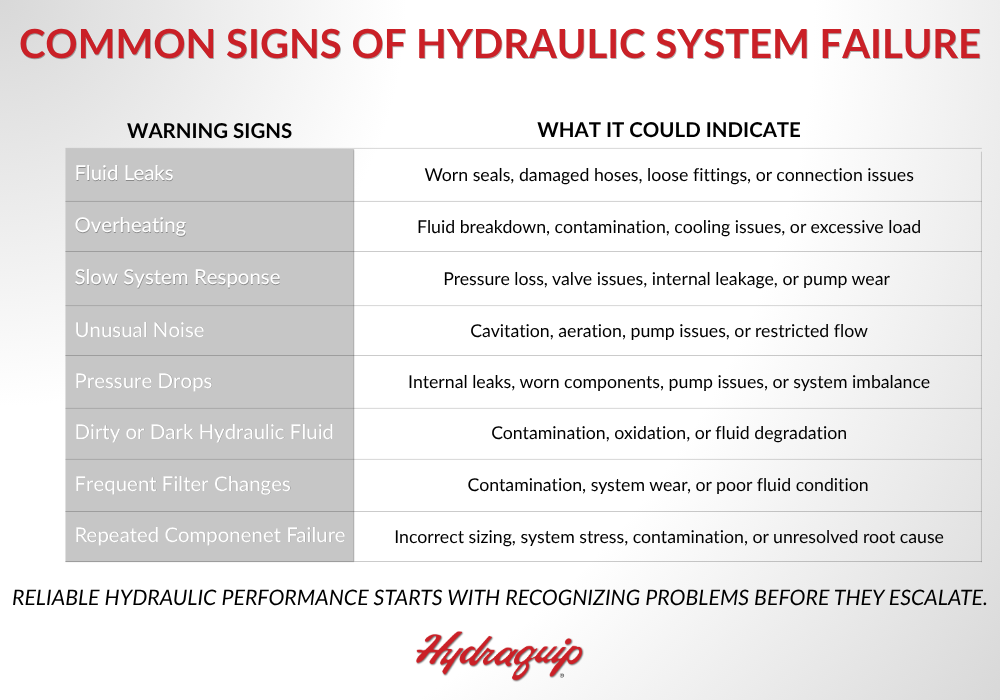
Common warning signs include fluid leaks, overheating, slow system response, unusual noise, pressure drops, dirty hydraulic fluid, frequent filter changes, and repeated component failures. Catching these signs early can help reduce unexpected downtime.
How can Hydraquip help reduce hydraulic downtime?
Hydraquip’s Service & Repair team helps customers troubleshoot hydraulic issues, identify root causes, support preventive maintenance, and recommend repair or system improvement solutions. With a Grand Prairie location serving the Dallas-Fort Worth area, Hydraquip provides local support to help keep hydraulic systems running reliably.