
As artificial intelligence, cloud computing and high-performance computing continue to increase data center heat loads, facility teams are under more pressure than ever to protect uptime. Power redundancy, cooling capacity and monitoring systems are all essential, but one reliability factor is often overlooked until it causes a problem: fluid contamination.
Data centers rely on multiple fluid systems. These may include hydraulic systems supporting facility equipment, chilled-water loops, coolant distribution units, direct-to-chip liquid cooling systems, heat exchangers, pumps, valves and fluid-transfer equipment. Each system has different fluid requirements, but they all share one risk: contamination can reduce performance, increase maintenance costs and shorten equipment life.
Contamination may come from component wear, poor maintenance practices, unfiltered fluid transfer, construction debris, corrosion products, fluid degradation or environmental exposure. In some cooling systems, scale, biological growth, suspended solids or incompatible additives may also affect performance.
Because many contaminants are microscopic, they are not always visible during routine inspections. A system may appear clean while particles, moisture or fluid degradation are already affecting pumps, valves, filters, heat exchangers or instrumentation.
That is why contamination control should be treated as a proactive reliability strategy, not just a maintenance task.
As a trusted distributor of Schroeder Industries filtration and contamination control products, Hydraquip helps customers identify, monitor and reduce contamination risks in critical fluid systems. By combining application support with high-performance filtration technologies, Hydraquip helps data center operators protect equipment, improve reliability and support long-term uptime.
Why Fluid Contamination Matters in Data Centers
Modern data centers depend on reliable cooling. As rack densities increase and more facilities adopt liquid cooling, fluid systems are becoming more important to overall uptime.
Contamination can affect system performance in several ways:
- Abrasive particles can accelerate pump, valve and seal wear.
- Debris can restrict filters, strainers and small flow passages.
- Fouling can reduce heat-exchanger performance.
- Poor fluid condition can shorten component life.
- Contaminated maintenance practices can introduce new problems during service.
- Excessive filter loading can increase pressure drop and reduce system efficiency.
The specific risk depends on the system. A hydraulic power unit, chilled-water loop and direct-to-chip cooling loop may require different filtration methods, materials, cleanliness targets and maintenance practices. The right strategy starts with understanding the fluid, equipment, operating conditions and criticality of the application.
1. Monitor Fluid Cleanliness Regularly
The first step in contamination control is knowing what is happening inside the system.
Instead of waiting for visible symptoms, data center teams should monitor fluid condition as part of a preventive or predictive maintenance program. Fluid analysis and contamination monitoring can help identify issues before they lead to equipment damage or cooling performance problems.
Depending on the system, monitoring may include:
- Particle counts
- ISO cleanliness codes
- Moisture levels
- Wear metals
- Fluid degradation
- Filter performance trends
- Differential pressure across filters
- Coolant or fluid chemistry indicators
ISO cleanliness codes are commonly used in hydraulic and lubrication systems to define acceptable particle levels. In cooling-water or coolant loops, additional factors such as water chemistry, corrosion, biological growth, glycol condition or additive compatibility may also need to be evaluated.
The most important point is consistency. Tracking fluid condition over time allows maintenance teams to spot trends early. A gradual increase in particles, moisture, pressure drop or degradation byproducts may indicate that a filter is no longer performing as expected, a component is wearing, or maintenance practices are introducing contamination.
Schroeder Industries offers contamination monitoring and diagnostic solutions that can support fluid cleanliness programs in demanding applications. Hydraquip can help customers determine which monitoring approach makes sense based on the system type, fluid, cleanliness target and maintenance strategy.
2. Use the Right Filtration Strategy for the Application
Filtration is one of the most effective ways to remove contaminants before they damage critical equipment. However, not every system needs the same type of filter.
A hydraulic system supporting facility equipment may require pressure-line, return-line or offline filtration. A chilled-water loop may require strainers, side-stream filtration, water treatment and corrosion control. A direct-to-chip cooling loop may require filtration selected around coolant compatibility, small-passage protection, flow requirements and manufacturer specifications.
Common filtration strategies include:
- Pressure-line filtration to protect sensitive downstream components
- Return-line filtration to remove contamination before fluid returns to a reservoir
- Offline or kidney-loop filtration for continuous fluid conditioning
- Portable filter carts for fluid transfer, flushing and maintenance
- Breather filtration to help reduce airborne contamination entering reservoirs
- Replacement filter elements selected for the required cleanliness target
- Differential-pressure monitoring to help identify when a filter element is ready for changeout
The correct solution depends on several factors:
- Fluid type
- Flow rate
- Operating pressure
- Temperature range
- Target cleanliness level
- Component sensitivity
- System architecture
- Material compatibility
- Maintenance access
- Manufacturer requirements
This is where application support matters. Selecting a filter only by size or flow rate can lead to inadequate filtration, excessive pressure drop, compatibility issues or inadequate component protection.
Schroeder Industries provides a broad range of filtration and contamination control products for industrial fluid systems. Hydraquip works with customers to match these solutions to the actual operating requirements of the application rather than taking a one-size-fits-all approach.
3. Replace Filter Elements Before They Restrict Performance
A filtration system can only protect equipment when the filter element is maintained properly.
As a filter captures particles, differential pressure across the element increases. If the element is not replaced at the appropriate time, the system may experience reduced flow, increased pressure drop, higher pump load or reduced cooling performance. In filtration systems with bypass valves, excessive differential pressure may allow fluid to completely bypass the element, losing all contamination protection.
Filter replacement should be based on a combination of:
- Differential pressure indicators
- Fluid cleanliness results
- Manufacturer recommendations
- Equipment operating hours
- Historical maintenance trends
- Criticality of the system
- Actual operating conditions
Condition-based replacement is often more effective than relying only on fixed maintenance intervals. A system operating in a clean, controlled environment may not load filters at the same rate as a system exposed to frequent maintenance activity, construction debris, fluid transfer or component wear.
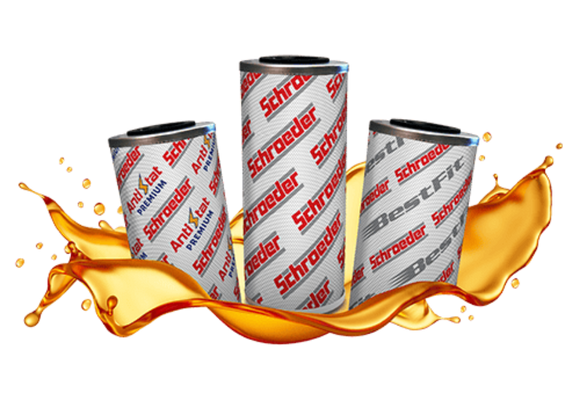
Hydraquip stocks genuine Schroeder replacement filter elements and can help customers identify the correct elements for their equipment. Keeping replacement elements available helps maintenance teams respond quickly when filters reach their service limit and reduces the risk of delaying service on critical systems.
4. Prevent Contamination During Maintenance
Many contamination problems are introduced during maintenance, commissioning or fluid transfer.
Every time a reservoir is opened, a line is disconnected, a filter element is replaced or fluid is transferred, contaminants have an opportunity to enter the system. Even new fluids may require filtration before use, especially in hydraulic and lubrication systems where cleanliness levels are critical.
Common maintenance-related contamination sources include:
- Dirty transfer containers
- Unfiltered new fluid
- Contaminated hoses
- Open reservoirs
- Poor fluid storage practices
- Dust or debris entering exposed components
- Improper handling of replacement filters
- Inadequate flushing after installation or repair
Cleaner maintenance practices can significantly reduce contamination risk.
Best practices may include:
- Filtering fluids before filling equipment
- Using dedicated filter carts for fluid transfer
- Keeping reservoirs sealed whenever possible
- Installing quality breather filters where appropriate
- Cleaning fittings before opening the system
- Using sealed containers designed for fluid handling
- Protecting replacement filters from dust and moisture before installation
- Following system flushing and commissioning procedures
- Training maintenance teams on contamination control
For data center projects, contamination control should begin before the system is placed into service. Construction debris, manufacturing residue and installation contamination can remain in piping and equipment if flushing and commissioning procedures are not handled properly.
Hydraquip can support customers with filtration products, fluid handling accessories and replacement elements that help reduce contamination during both startup and ongoing maintenance.
5. Work with a Partner Who Understands Fluid-System Reliability
Contamination control is not just about installing a filter. It requires understanding the system, the fluid, the equipment being protected and the consequences of failure.
A data center may include several different fluid systems with different requirements. Hydraulic equipment, chilled-water systems, coolant distribution units and technology cooling loops should not automatically be treated the same way.
Hydraquip helps customers evaluate:
- What type of fluid system is being protected
- Which components are most sensitive to contamination
- Where filtration should be installed
- What cleanliness target is appropriate
- Whether offline filtration or portable filtration is needed
- How filters should be monitored and replaced
- Which replacement elements match the installed equipment
- How maintenance practices may be introducing contamination
- Whether fluid analysis or contamination monitoring should be added
This application-based approach helps customers choose practical solutions that support reliability without overcomplicating maintenance.
Through its partnership with Schroeder Industries, Hydraquip can support a wide range of filtration and contamination control needs, including filter housings, replacement elements, portable filtration, offline filtration, breathers, diagnostic tools and contamination monitoring solutions.
Signs Your System May Have a Contamination Problem
Fluid contamination does not always cause immediate failure. More often, it develops gradually.
Warning signs may include:
- Rising operating temperatures
- Increased pump noise or vibration
- Frequent filter changes
- Rising differential pressure across filters
- Reduced flow
- Slow valve response
- Unexplained pressure fluctuations
- Heat-exchanger performance loss
- Sensor or diagnostic inconsistencies
- Increased energy consumption
- Premature seal, bearing or component wear
- Unexpected maintenance events
These symptoms do not always prove contamination is the root cause, but they are worth investigating. Fluid analysis, filter inspection, differential-pressure review and system performance trends can help determine whether corrective action is needed.
Protect Cooling Reliability Before Contamination Becomes Downtime
Data center uptime depends on more than cooling capacity. It also depends on keeping the fluid systems behind that cooling infrastructure clean, reliable and properly maintained.
Fluid contamination can reduce cooling performance, damage components, increase energy consumption and create avoidable maintenance problems. A proactive contamination control strategy can help reduce those risks.
The most effective approach includes:
- Regular fluid cleanliness monitoring
- Filtration matched to the system and fluid
- Timely filter element replacement
- Clean maintenance and fluid-transfer practices
- Expert application support
Whether you are designing a new data center cooling system, supporting a CDU package, maintaining facility equipment or improving an existing preventive maintenance program, Hydraquip can help identify the right contamination control solution for your application.
As a trusted distributor of Schroeder Industries filtration products, Hydraquip provides access to high-performance filtration technologies, replacement filter elements, contamination monitoring tools and technical support for critical fluid systems.
Contact Hydraquip to discuss filtration and contamination control solutions for your data center application.
Frequently Asked Questions
What causes fluid contamination in data center cooling systems?
Fluid contamination may come from component wear, construction debris, maintenance activities, fluid transfer, corrosion products, fluid degradation, environmental exposure or improper storage. In water-based cooling systems, scale, biological growth, suspended solids and water chemistry issues may also affect performance.
Is hydraulic fluid contamination the same as coolant contamination?
No. Hydraulic systems, chilled-water systems and direct-to-chip cooling loops may have different fluids, materials, cleanliness targets and maintenance requirements. The same contamination-control principles apply, but the filtration strategy must be selected for the specific system.
Can new fluid already be contaminated?
Yes. New hydraulic or lubricating fluid may not meet the cleanliness level required for sensitive equipment. Many facilities filter new fluid before adding it to a system. For cooling fluids or water-based systems, the required treatment or filtration depends on the coolant chemistry and system manufacturer requirements.
Why is differential pressure important across a filter?
Differential pressure shows the pressure difference between the inlet and outlet of a filter. As the filter captures particles, differential pressure typically increases. Monitoring this value helps maintenance teams determine when a filter element may need to be replaced.
When should filter elements be replaced?
Filter elements should be replaced based on differential pressure, fluid cleanliness data, operating hours, manufacturer recommendations and system criticality. Waiting too long can increase pressure drop, reduce flow and compromise system performance.
Does filtration replace water treatment in chilled-water systems?
No. Filtration can remove suspended solids, but chilled-water systems may also require water treatment to manage corrosion, scale, biological growth and chemistry. Filtration and water treatment often work together, but they are not the same.
What Schroeder products can support contamination control?
Depending on the application, Schroeder solutions may include filter housings, replacement filter elements, offline filtration systems, portable filter carts, breathers, differential-pressure indicators, diagnostic tools and contamination monitoring products. Hydraquip can help determine which solution fits the system requirements.