

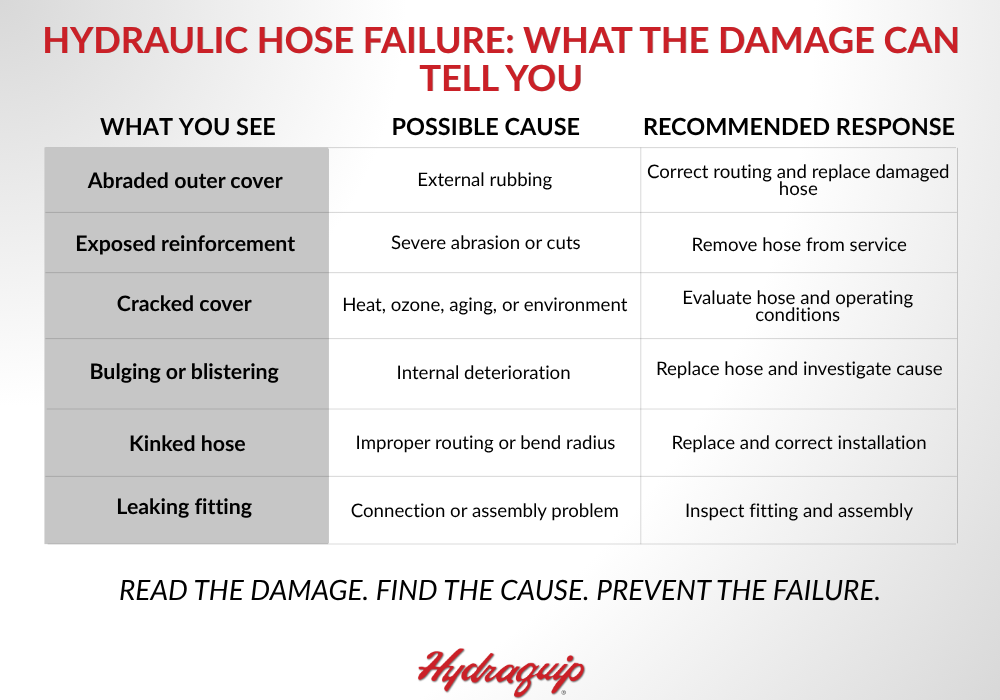
Hydraulic hose failure can bring equipment to a sudden stop, create costly downtime, damage hydraulic components, and introduce serious safety hazards. While some failures may appear unexpected, most hydraulic hose failures have an identifiable cause.
During Hose Safety Awareness Month, organizations across the industry emphasize the importance of proper hose selection, inspection, installation, and maintenance. National Association for Hose and Accessories Distribution (NAHAD) plays an important role in promoting hose assembly safety and industry best practices, including standards and guidelines designed to help hose professionals build and maintain reliable assemblies. Hose Safety Institute also provides guidance for hydraulic hose assembly selection, routing, fabrication, installation, replacement, maintenance, and storage.
For Hydraquip, hydraulic hose safety is a priority for reliable fluid power solutions. Understanding what causes a hydraulic hose failure is the first step toward preventing premature failures and keeping equipment operating safely.
What Causes Hydraulic Hoses to Fail?
Hydraulic hoses most commonly fail because of excessive pressure, excessive heat, abrasion, improper routing or installation, incorrect hose selection, chemical or environmental exposure, and mechanical damage. Identifying the specific cause of a failure is important because simply replacing the hose may not prevent the same problem from happening again.
7 Common Causes of Hydraulic Hose Failure
1. Excessive Pressure
Hydraulic hoses are designed to operate within specific pressure ratings. When system pressure exceeds the hose’s rated working pressure, the hose can become damaged or fail.
Pressure-related failures can be caused by:
- Operating above the hose’s rated working pressure
- Pressure spikes
- Incorrect hose selection
- Malfunctioning hydraulic components
- Improperly adjusted relief valves
- System modifications that change operating conditions
Pressure spikes can be particularly problematic because a system may appear to operate within its normal pressure range while experiencing short-duration pressure increases. Fast pressure spikes may not always be visible on a standard pressure gauge, making them difficult to identify during normal operation.
How to Prevent Pressure-Related Hose Failure
To reduce the risk of pressure-related failure, verify that the hose’s working pressure rating is appropriate for the system’s normal operating pressure and any pressure spikes it may experience. Check relief valve settings and other system components that could affect pressure, especially after modifications or repairs.
It is also important to consider the pressure rating of the complete hose assembly, including the fittings and connections. The lowest-rated component in the assembly can limit the overall working pressure of the complete assembly. A hose assembly should never be put into service that has a working pressure rating below the system pressure.
2. Excessive Heat
High temperatures can cause hydraulic hose materials to deteriorate over time. Both the temperature of the hydraulic fluid and the temperature of the surrounding environment can affect hose performance.
Excessive heat can accelerate aging, reduce the hose’s service life, and contribute to cracking or other forms of deterioration. Heat can come from the hydraulic system itself, nearby engines or exhaust components, or other sources within the equipment.
How to Prevent Heat-Related Hose Failure
When selecting a hydraulic hose, verify that its temperature rating is suitable for the application. Keep hoses away from unnecessary heat sources and use appropriate routing or protective measures when exposure cannot be avoided.
If operating conditions change or equipment is modified, reevaluate the hose’s temperature requirements to make sure the existing assembly is still appropriate.
3. Abrasion
Abrasion occurs when a hose repeatedly rubs against equipment, another hose, or another surface. Even if the contact seems minor, continuous movement and vibration can gradually wear through the hose’s outer cover and eventually expose the reinforcement.
Abrasion is especially common when hoses are routed too close to moving components or are not adequately supported. Once the outer cover is damaged, the hose can become more vulnerable to additional wear and environmental exposure.
How to Prevent Abrasion-Related Hose Failure
Inspect hose routing for areas where contact or rubbing may occur. Use clamps, supports, guards, sleeves, or other appropriate protection to minimize unnecessary movement and contact.
When replacing a hose that has failed because of abrasion, correcting the routing or protecting the affected area is just as important as replacing the hose itself.
4. Improper Routing or Installation
A properly selected hose can still fail prematurely if it is installed incorrectly. Twisting, kinking, excessive bending, or installing a hose under tension can place additional stress on the hose and fittings.
Improper routing can also create problems when equipment moves during operation. A hose may look properly positioned when the equipment is stationary but become stretched, compressed, or sharply bent when components move through their normal range of motion.
How to Prevent Installation-Related Hose Failure
Route hoses using the recommended minimum bend radius designated by the manufacturer of that hose. Make sure fittings are correctly oriented and that the hose has enough length to accommodate normal movement under pressure without creating excessive tension.
Before returning equipment to service, inspect the completed installation and confirm that the hose is not twisted, kinked, stretched, or contacting nearby sharp edges or wear points.
5. Incorrect Hose Selection
Not every hydraulic hose is suitable for every application. Selecting a hose based only on size or pressure rating can overlook other factors that affect performance, including temperature, fluid compatibility, specific application requirements, fittings, and environmental conditions.
Using an incorrect hose can result in premature deterioration or failure even when the hose appears to be installed correctly. Changes to equipment or operating conditions can also make a previously suitable hose inappropriate for the application.
6. Chemical and Environmental Exposure
Hydraulic hoses can be exposed to conditions beyond the hydraulic fluid flowing through them. Chemicals, oils, solvents, ozone, sunlight, moisture, extreme temperatures, and other environmental factors can affect hose materials depending on the application.
Over time, exposure can contribute to cracking, deterioration, or other damage. The surrounding environment should therefore be considered when selecting and routing a hose.
How to Prevent Environmental Hose Failure
Evaluate the environment where the hose will operate and select a hose designed for those conditions. Protect assemblies from unnecessary exposure to chemicals, excessive heat, UV radiation, and other environmental hazards when possible.
Regular inspection is also important because environmental deterioration may develop gradually before becoming an obvious failure.
7. Mechanical Damage
Hoses can also be damaged by impacts, crushing, sharp edges, excessive bending, or contact with moving equipment. Mechanical damage may occur during normal operation or during maintenance and equipment service.
Damage to the hose cover or reinforcement can weaken the assembly and increase the risk of failure. In some cases, the damage may not be immediately obvious, making routine inspection especially important.
How to Prevent Mechanical Damage
Consider how equipment moves and operates when routing hydraulic hoses. Keep hoses away from pinch points, sharp edges, moving components, and areas where they could be crushed or struck.
Use appropriate guards, clamps, supports, or protective sleeves where necessary, and inspect hoses after maintenance or other work that could have disturbed their routing.
How to Prevent Hydraulic Hose Failure
Preventing hydraulic hose failure starts before the hose is installed. A combination of proper selection, installation, inspection, and maintenance can significantly reduce the risk of premature failure.
Select the Right Hose
Evaluate size, pressure, temperature, media, application, fittings, and environmental conditions before selecting a hose.
Install Hoses Correctly
Follow the manufacturer’s requirements for bend radius, routing, fitting orientation, and installation. Avoid twisting, kinking, excessive tension, and unnecessary movement.
Inspect Hoses Regularly
Routine hose inspections can help identify damage before a hose fails. Look for cracks, cuts, abrasion, bulges, leaks, exposed reinforcement, damaged fittings, and other warning signs.
Investigate Repeated Failures
If the same hose or hose location fails repeatedly, looking beyond the failed component is essential. Repeated failures often indicate an unresolved application, routing, environmental, or system issue.
What Should You Do When a Hydraulic Hose Fails?
Hydraulic hose failures can involve high-pressure fluid and stored hydraulic energy. Safety should always be the first priority when responding to a failure.
When a hose fails:
- Stop the prime mover on equipment.
- Follow the equipment’s shutdown and lockout/tagout procedures.
- Relieve or bleed off stored hydraulic pressure before beginning repairs.
- Never use your hands to search for a hydraulic leak. High-pressure fluid can penetrate the skin and cause serious injury. Hydraulic injection injuries should be treated as a medical emergency, even when the injury appears small or minor.
- Inspect the failed hose and surrounding components.
- Document the location and type of damage.
- Identify potential causes before selecting a replacement.
- Verify that the replacement hose and fittings are appropriate for the application.
- Inspect the completed installation before returning the equipment to service.
If the cause of the failure is unclear, a hydraulic specialist can help evaluate the assembly and surrounding system conditions.
Why Replacing the Hose May Not Fix the Problem
A failed hose is often the most visible part of a larger problem. Simply installing a new hose may restore equipment operation temporarily, but it does not necessarily address the reason the original hose failed.
For example, a hose that repeatedly fails from abrasion may continue to fail if its routing is not corrected. A hose that fails because of excessive pressure may experience the same problem if the system pressure is not addressed. Similarly, an incorrectly selected hose may fail again even if the replacement assembly is installed correctly.
This is why hydraulic hose failure analysis should focus on both the failed component and the conditions surrounding it.
Hydraquip can help evaluate hose assemblies, application requirements, routing, and other fluid power considerations to help identify the cause of recurring hose problems.
Frequently Asked Questions About Hydraulic Hose Failure
What is the most common cause of hydraulic hose failure?
Common causes include abrasion, improper installation or routing, excessive pressure or temperature, incorrect hose selection, environmental exposure, and mechanical damage. The most likely cause depends on the specific application and failure pattern.
Why do hydraulic hoses burst?
Hydraulic hoses can burst when they are exposed to pressure beyond their rated capability, severe damage, deterioration, or other conditions that compromise the hose’s reinforcement and construction. System pressure spikes and external damage can also contribute to burst failures.
Why do hydraulic hoses crack?
Cracking can result from excessive heat, aging, ozone exposure, environmental conditions, chemical incompatibility, or other forms of material deterioration. The location and appearance of the cracking can provide clues about the cause.
How can I prevent hydraulic hose failure?
Use the correct hose for the application, install it accordingly, protect it from abrasion and environmental damage, inspect it regularly, and investigate recurring failures.
Why is my hydraulic hose leaking at the fitting?
Leaks at fittings can result from using improper fittings. Hose couplings must be designated as compatible for the hose by the hose manufacturers. Damaged sealing surfaces or threads, incorrect fittings for the adapter, connections improperly torqued, misalignment or cross-threaded fittings, or different type of threads are some of the causes for leaks at the fitting.
How often should hydraulic hoses be inspected?
Inspection frequency should be based on the equipment, application, operating conditions, manufacturer recommendations, and applicable safety requirements. High-pressure, high-temperature, high-cycle, or harsh-environment applications may require more frequent inspections.
Can a damaged hydraulic hose be repaired?
In general, a hose that has been compromised should be replaced rather than repaired. The appropriate response depends on the type, frequency, and severity of damage to the hose assembly..
What should I do if the same hydraulic hose keeps failing?
Repeated failures should be investigated to determine the root cause. Check pressure, temperature, routing, bend radius, abrasion, hose selection, fittings, fluid compatibility, and other operating conditions. Replacing the hose without correcting the underlying issue may result in another failure.
Prevent Hydraulic Hose Failures With Hydraquip
Hydraulic hose failure does not always happen without warning. In many cases, the damage provides clues about the conditions that caused it.
Understanding those clues can help maintenance teams move beyond simply replacing failed components and instead address the underlying cause. Proper hose selection, installation, inspection, and maintenance can help improve reliability, reduce unplanned downtime, and keep hydraulic equipment operating safely.
As part of Hose Safety Awareness Month, take time to inspect and evaluate hydraulic hoses, and look for signs of damage before they become failures.
Hydraquip provides technical support, hydraulic hose assembly application guidelines, fluid power solutions, service, and repairs to help customers keep their hydraulic systems operating reliably. Whether you need a replacement hose, help troubleshooting a recurring failure, or support selecting the right assembly for a demanding application, Hydraquip can help.
Hydraquip supports hydraulic hose assembly, replacement, service, and troubleshooting for customers across Texas, Louisiana, Oklahoma, Tennessee, and surrounding regions. Need help troubleshooting a hydraulic hose failure? Contact Hydraquip to discuss your application and find the right solution.